
Home / Services / Commercial Lawn Disease Control Vancouver
Vancouver, British Columbia
Commercial Lawn Disease Control Services Vancouver
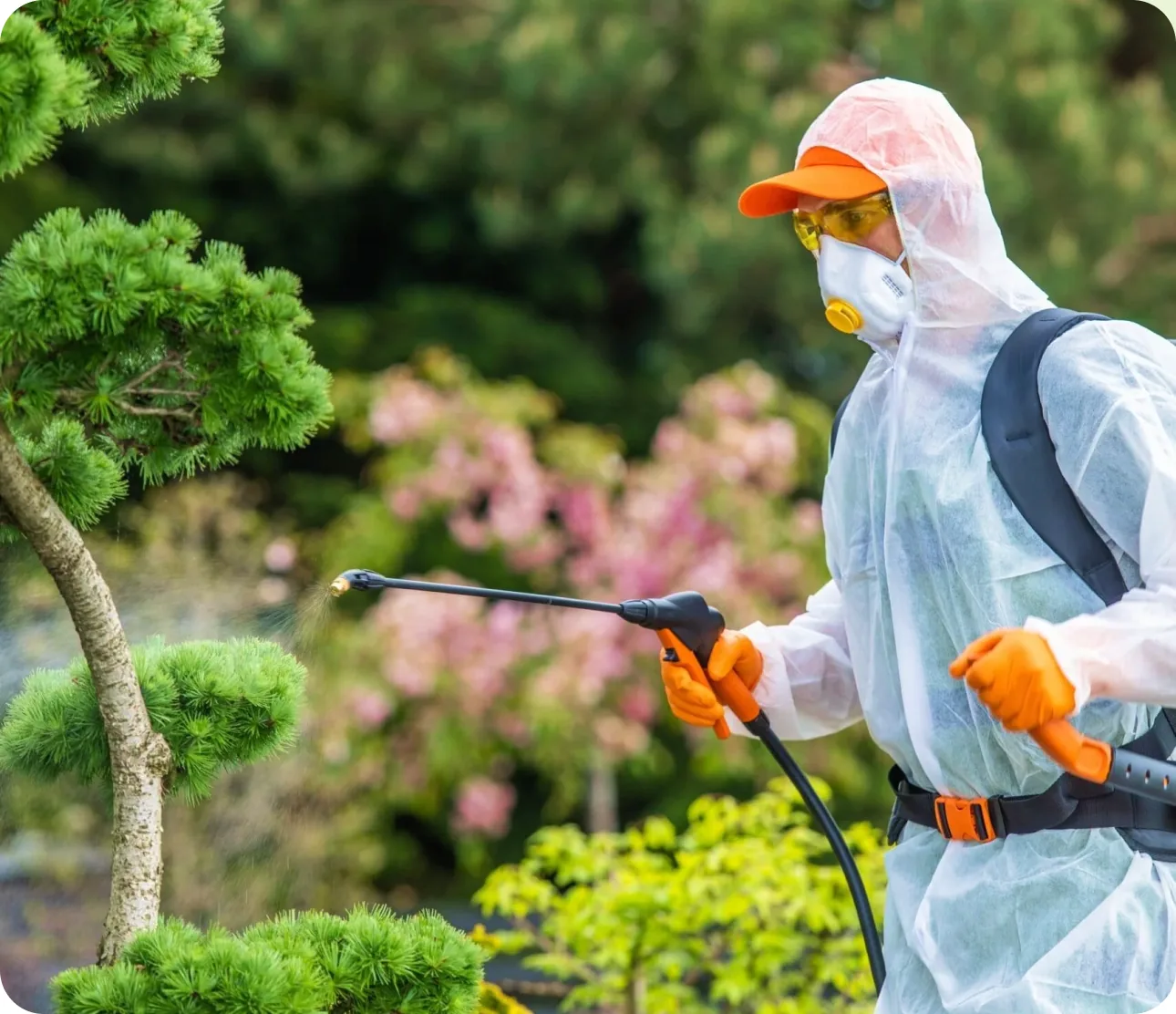
Weed Bros covers diagnosis, targeted fungicide treatment, and ongoing prevention for commercial turf across Vancouver. We find the exact fungal disease affecting your lawn, apply the product matched to that problem, and set a maintenance schedule that lowers the odds it comes back.
Diagnosis-first
IPM-based
Licensed applicators
Service records kept
10+
Years of combined team experience
4
Step diagnose–treat–report process
1–2
Weeks to visible improvement
IPM
Lowest-impact treatment that works
Why it matters here
Why commercial properties need lawn disease control
A commercial property is rarely one lawn. It's a front entrance zone, a courtyard, a strip along the parking lot, maybe a shaded side yard that never dries out. Each zone gets different sun, foot traffic, and often a different watering schedule — and that mismatch is where dollar spot and brown patch tend to start. One overwatered corner can undo the rest.
Fungal disease needs three things at once

Condition 01
Moisture on the blade
Water sitting on the leaf rather than drying off.
+

Condition 02
Mild-to-warm temperatures
The range where turf pathogens become active.
+

Condition 03
Turf that's already stressed
Weakened grass that can't hold off an infection.

All three together, and disease takes hold. The pathogens are already in the soil — these conditions are what open the door for them.
What opens that door
None of these cause disease directly. Together, they let turf pathogens already in the soil take over.

Compacted soil near walkways
Traffic packs the root zone and stresses the turf above it.

Thatch buildup under a low deck
Cutting short plus matted thatch holds moisture against the blade.

Irrigation running late evening
Water sits on the blade overnight instead of drying off by morning.

Different turf zones create different risk
Sun, traffic and watering all vary across a single commercial site, so one zone can be under pressure while the rest looks fine. Treating the property as one lawn misses that.

Prevent tenant and resident complaints
For a strata council or facility manager, a diseased lawn becomes a phone call. Owners ask why the courtyard looks patchy before a viewing, or why the entrance lawn has rings of dead grass in a photo. Catching it early keeps it off the record.

Protect your property
Catch it before it becomes a complaint.
Our process
How we treat lawn disease on commercial properties
01
Request an assessment
Reach out with a description of what you're seeing, or send a photo of the affected area. This gets your property on the schedule before symptoms spread.

A photo is enough to start
02
On-site diagnosis
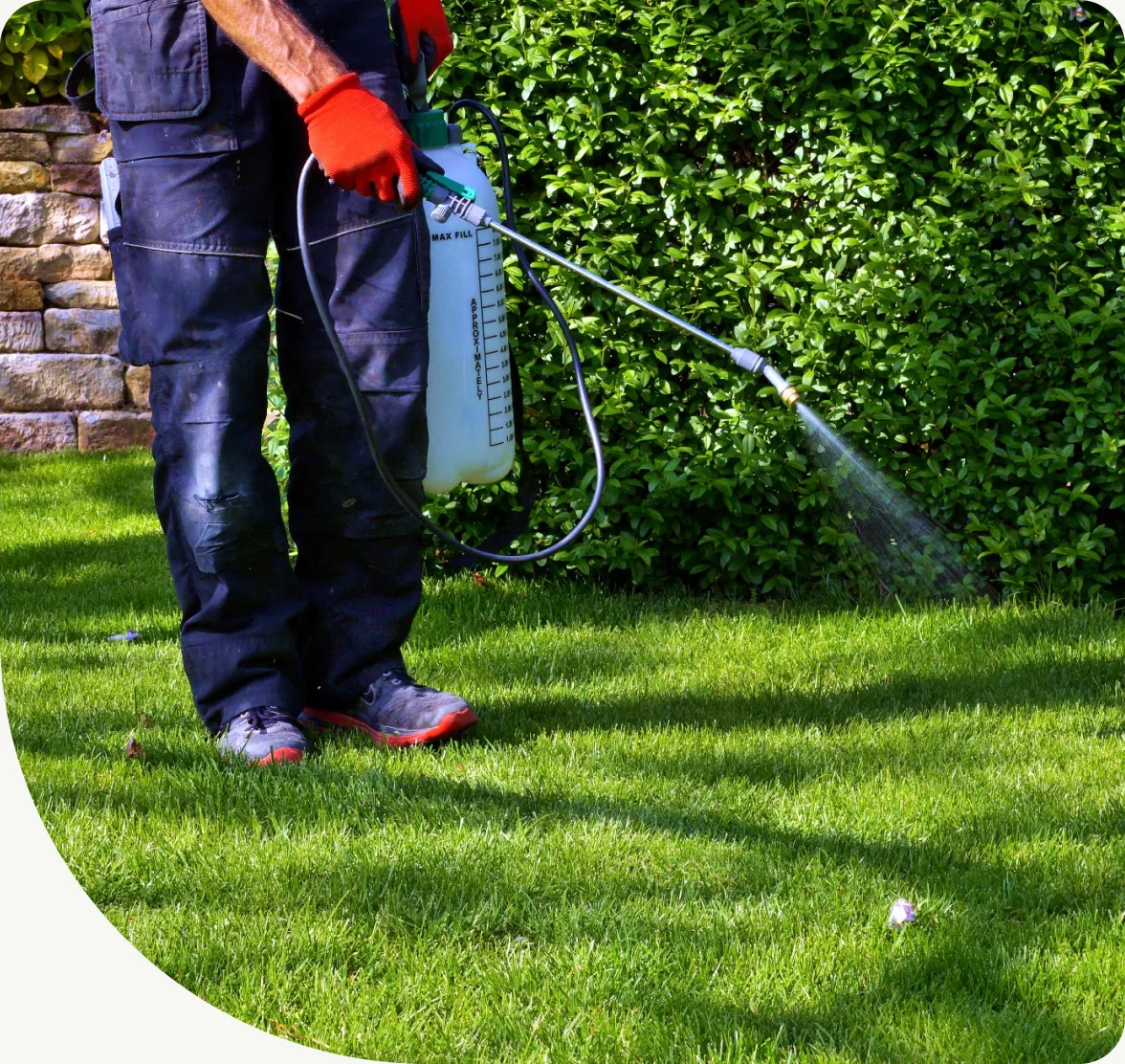
A technician inspects the turf directly, checks soil moisture, and identifies the disease and cause before recommending anything.

Cause identified, then treatment
03
Treatment plan and scheduled application
We put together a plan that fits the diagnosis and your property's schedule, then apply fungicide at a time that works around your operations.

Around your operations
04
Follow-up check and reporting
After treatment we check the site again to confirm the disease is under control, and provide a report you can keep on file.

Report for your records

Contact us today
Send a photo and we'll take it from there.
What we treat
Common lawn diseases we treat
Whatever the turf pathogen, we diagnose it correctly first — treating the wrong thing costs a season.
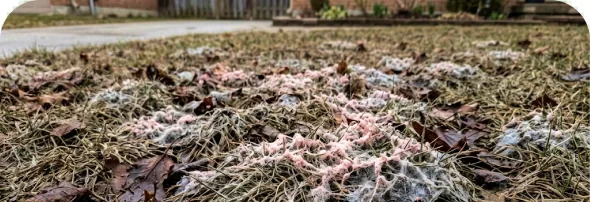
Snow mould
Matted greyish-white or pink patches once snow melts or a long wet spell clears. Vancouver doesn't get deep snow every year, but wet leaf litter left over winter creates the same cover-and-moisture combination.
Grass under it flattens and is slow to recover
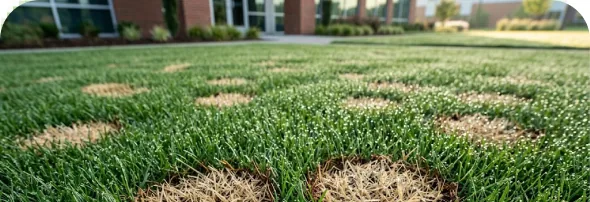
Dollar spot
Named for the small, silver-dollar-sized patches it leaves, usually when humidity sits high overnight. One of the most common calls we get on commercial sites.
Spreads fast across open, sunny turf
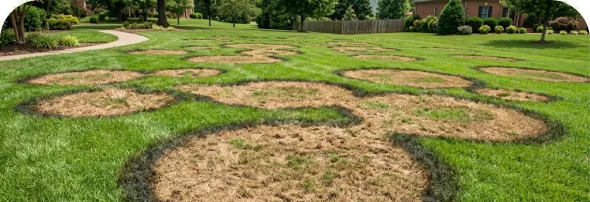
Brown patch
Moves quicker than most. In hot, humid weather it can turn a healthy section of lawn into a ring of collapsed, brown grass within days.
Worst where airflow is blocked by shrub borders
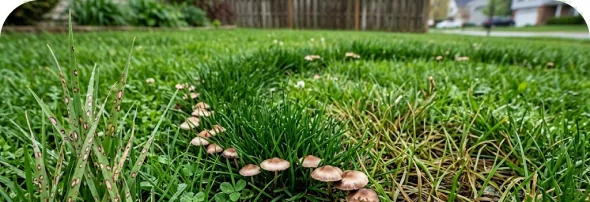
Other turf diseases
Fairy ring shows dark rings tied to buried wood underground. Leaf blight and leaf spot show as blade spotting in wet spring weather. Melting out hits Kentucky bluegrass hard in cool weather.
Fairy ring
Leaf blight
Leaf spot
Melting out
Necrotic ring spot
Powdery mildew

Schedule an inspection
Identification before any product goes down.
Diagnosis
Our lawn disease inspection process

Early signs of lawn disease
Easy to miss. A slightly duller patch of green. A ring that looks more like a shadow than damage. Blades with tiny lesions you'd need to kneel down to notice. Catching it at this stage is worth requesting a quote early, before cost climbs with the size of the affected area.

Professional lawn inspection
We walk the property and inspect the patches directly, checking blade texture, patch shape, and how the damage sits against irrigation lines. Soil moisture gets checked too, since a soggy root zone points toward a different disease than turf that's too dry.

Matching disease to turf type
Not every lawn in Vancouver is seeded the same way, and grass species react differently to the same fungal disease. What looks like leaf spot on one variety can present differently on another — matching symptom to species is what separates diagnosis from guess-and-spray.

Book a turf assessment
Symptom matched to species, not a guess.
Treatment
Commercial lawn fungicide treatment

Targeted fungicide applications
Some diseases call for spot treatment in the exact zone. Others, once a disease has spread, need a broader application across the whole lawn. We choose based on what the inspection shows, not a default setting — product and coverage area both depend on the diagnosis.

Flexible commercial scheduling
A retail plaza can't close its entrance for an afternoon. An office building still needs its courtyard usable during lunch. We schedule application windows around your property's actual traffic patterns — early morning or after hours.

IPM-based disease control
IPM means we don't reach for the strongest product every time. We look at the disease, its severity, and site conditions, and use the lowest-impact treatment that solves the problem. That fits properties where staff, tenants, or pets are on the grounds daily.

Book now
Applied around your traffic, not through it.
Prevention
Long-term turf disease prevention

Maintenance that prevents disease
Cutting grass too short stresses the blade and opens the door for disease. Feeding it nitrogen at the wrong time does something similar. Part of our work is adjusting mowing height and fertilizer timing so the turf itself is less inviting to fungal disease — a piece most spray-only companies skip.

Correcting recurring disease zones
If the same corner keeps getting brown patch or dollar spot every season, the fix usually isn't more fungicide. We flag these zones and recommend fixes for the actual cause, since repeat visits push up cost over a season.

When the same zone keeps failing, it's rarely the fungicide
Standing water, poor grading, or dense hedging blocking airflow brings disease back no matter how many treatments go down. Treating the symptom on a schedule costs more across a season than fixing the cause once.
Standing water
Poor grading
Dense hedging
Blocked airflow

Get in touch
We'd rather fix the cause than re-treat it.
Pricing
How lawn disease pricing works
For a number specific to your property, a quote accounts for all of this — and you can get an estimate before any work begins.

Treatment area and damage level
A single patch on a small courtyard costs less than disease spread across several acres — the biggest factor on any commercial site. Severity matters too: early-stage disease needs less product and fewer visits than an outbreak that's taken a full zone.

Treatment schedule and site access
Some properties need one round of fungicide and a follow-up. Others, with chronic drainage issues, need a scheduled program across the season. Accessibility plays a role too, since gated properties or limited equipment access can affect pricing.
Get a custom estimate
Send the basics and we'll diagnose on site before pricing the work.
Why Weed Bros
What backs our disease control work on your property

Certified applicators and service records
Every fungicide application is carried out by a licensed applicator, and we keep records of what product was used, where, and when. Strata councils and facility managers can request this documentation for their own files.

Follow-up service guarantee
If the same diagnosed disease returns in the same zone within the treatment window, we return and reassess at no extra charge. That's part of the service, not an add-on.

Targeted, not blanket, application
We don't run one blanket spray across every property. The fungicide applied is chosen for the diagnosed disease and grass species on site — a different approach than a standard mix sprayed the same way on every stop.

Work with commercial lawn care experts
Documentation on file for your council.
FAQ
Frequently asked questions
What property managers and strata councils ask most about turf disease.
01Could yellowing turf be something other than disease?
Yes. Yellowing can come from drought stress, pet damage, nutrient deficiency, or leftover chemical burn from a prior application. That's why diagnosis comes first — treating a nutrient issue with fungicide won't fix it.
02Is it worth waiting to see if a patch clears up on its own?
Sometimes minor stress resolves on its own. Actual fungal disease usually doesn't. Waiting gives it more time to spread into surrounding turf, meaning a larger area to treat later.
03What maintenance habits lower the risk of disease between visits?
Mowing at the right height, avoiding evening watering, and clearing leaf litter before it mats down over winter all reduce risk. None of these guarantee disease won't show up, but they lower the odds.
04How long does lawn disease treatment take to show results?
Most properties see visible improvement within one to two weeks after you book lawn disease treatment, though full recovery of damaged turf can take longer depending on the season and how far the disease had spread before treatment.
05Will treatment disrupt tenants, residents, or business operations?
We schedule around your property's traffic and post standard re-entry guidance after application. Most commercial sites see no disruption to daily operations at all.
06Can one property have more than one turf disease at a time?
Yes, and it's more common than people expect on larger sites with varied grass zones. Different areas can develop different diseases depending on shade, drainage, and irrigation in that spot.
07Do you provide a service report for strata council records?
Yes. We also keep a simple record for each lawn disease control visit, including what we found, what product was used, and the application date. That way, strata councils and facility teams have it on hand.
Next step
Protect your property's turf before disease spreads
Turf disease rarely fixes itself, and on a commercial property a small patch can turn into a bigger problem before anyone budgets for it. We cover strata complexes, office grounds, and business properties across Vancouver — diagnosis through treatment and long-term prevention.
Snow mould treatment, fungal disease control for strata green spaces, and scheduled prevention for office grounds are all part of what we handle, season to season. Disease management takes more than a one-time spray.
Book Lawn Disease Treatment
1-833-WEED-PRO
Mon–Fri 7am–6pm

hello@weedbros.ca
Send a photo to start

Vancouver & Lower Mainland
Strata, office & business grounds